Criminal Justice Responses to Maternal Filicide by Emma Milne
Author:Emma Milne [Milne, Emma]
Language: eng
Format: epub
Tags: Nonfiction, Social & Cultural Studies, Social Science, Crimes & Criminals, Penology, Criminology
ISBN: 9781839096228
Publisher: Emerald Publishing Limited
Published: 2021-08-27T04:00:00+00:00
Soul-destroying Closed Spaces
The prison environment, with its high levels of security and practical interior, creates a particular experience of closed space. It is not all about locks, but also about geographical location. Many prisoners report they feel displaced to âa different countryâ (Olivia) because the prison is far away from their home. While some perceive it as âone of the most hard to get-out-of prisonsâ in terms of security, others say that it does not feel like an âactual prisonâ with regard to layout, atmosphere and âeven just colours of wallsâ (Kara) reminding of Carlenâs (1983) reports of womenâs prisons being seen as âholiday campsâ. Despite these descriptions, however, the effect of being locked up is described in the same way with varying pains attached: âsitting in the wee room [by] yourself, it just makes you feel depressedâ (Louise). Spatial awareness of the confined surrounding can be found in every interview, the assemblages of spaces contributing to the experience of being locked up. Even though many prisoners move cells several times during their confinement, most rooms are decorated with pictures on assigned boards and toiletries on the shelves to âmake it feel as homely as you canâ (Hannah). The TV and the kettle are considered the most important items, while many complain about the mattresses being too hard and causing back pain. Other items in the cell have improved since the refurbishment, with freshly painted walls and clean furniture where before the bunk beds were ârusty and horribleâ, walls covered in toothpaste and writing all over the beds and the rooms. The new colour scheme does not suit everyone: âthe rooms are alright. Pink. (â¦) Pink, thatâs the colour ae the wall. (â¦) and then itâs pink bedding. I donât âhink every lassie like pinkâ (Flo). This is sign of the feminisation of prison space which many young women talk about and most have reservations about.
Many say they find it stressful to move rooms, when they are downgraded or even enhanced. Most form a certain attachment to their room, especially if they are there on a longer basis, perhaps due to a homely feel gained from their own decorations or the local view and soundscape. Prisoners can develop an attachment to particular personal spaces and rituals:
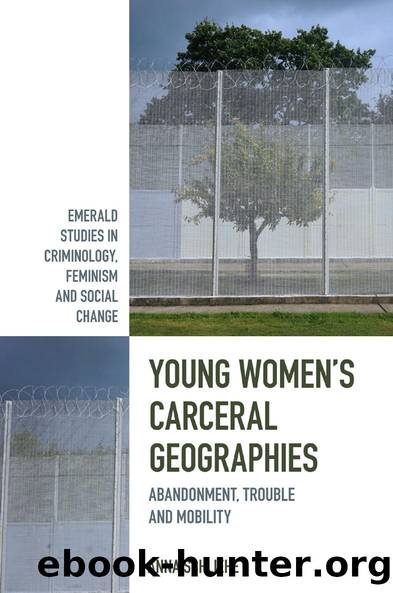
I liked my old room because I always slept on the tap bunk and I used tae listen fur the trains gaun by. So I used to open the curtain and see the big trains (â¦) but when you look oot my windae [now] itâs just they fences, oh my god, they have actually fences that I cannae climb. (â¦) Itâs just you look oot, man, whatâve we got? Big massive fences. You see like the trees and thatâs dead nice, and then you just see these big horrible, big-ass fences. And youâre like that âright, Iâm depressedâ. Just lie in my bed aâ day. (Bianca)
The oppressiveness of the physical space can have a direct impact on the young womenâs mood and levels of hope.
Download
This site does not store any files on its server. We only index and link to content provided by other sites. Please contact the content providers to delete copyright contents if any and email us, we'll remove relevant links or contents immediately.
| Anthropology | Archaeology |
| Philosophy | Politics & Government |
| Social Sciences | Sociology |
| Women's Studies |
Cecilia; Or, Memoirs of an Heiress — Volume 1 by Fanny Burney(32558)
The Great Music City by Andrea Baker(32018)
Cecilia; Or, Memoirs of an Heiress — Volume 2 by Fanny Burney(31956)
Cecilia; Or, Memoirs of an Heiress — Volume 3 by Fanny Burney(31941)
We're Going to Need More Wine by Gabrielle Union(19046)
All the Missing Girls by Megan Miranda(16023)
Pimp by Iceberg Slim(14506)
For the Love of Europe by Rick Steves(14121)
Bombshells: Glamour Girls of a Lifetime by Sullivan Steve(14073)
Talking to Strangers by Malcolm Gladwell(13370)
Norse Mythology by Gaiman Neil(13363)
Fifty Shades Freed by E L James(13239)
Mindhunter: Inside the FBI's Elite Serial Crime Unit by John E. Douglas & Mark Olshaker(9339)
Crazy Rich Asians by Kevin Kwan(9290)
The Lost Art of Listening by Michael P. Nichols(7506)
Enlightenment Now: The Case for Reason, Science, Humanism, and Progress by Steven Pinker(7311)
The Four Agreements by Don Miguel Ruiz(6763)
Bad Blood by John Carreyrou(6621)
Weapons of Math Destruction by Cathy O'Neil(6279)
